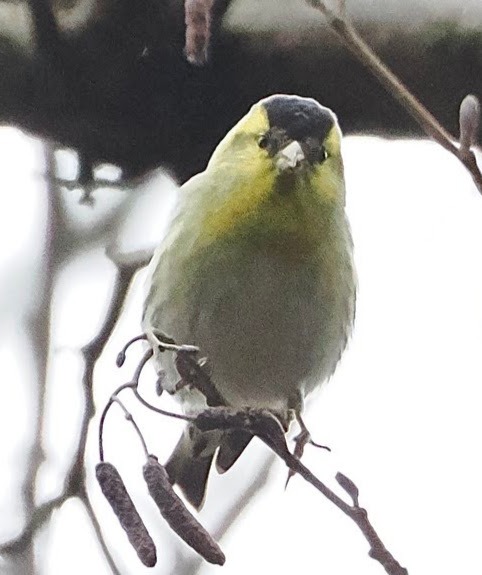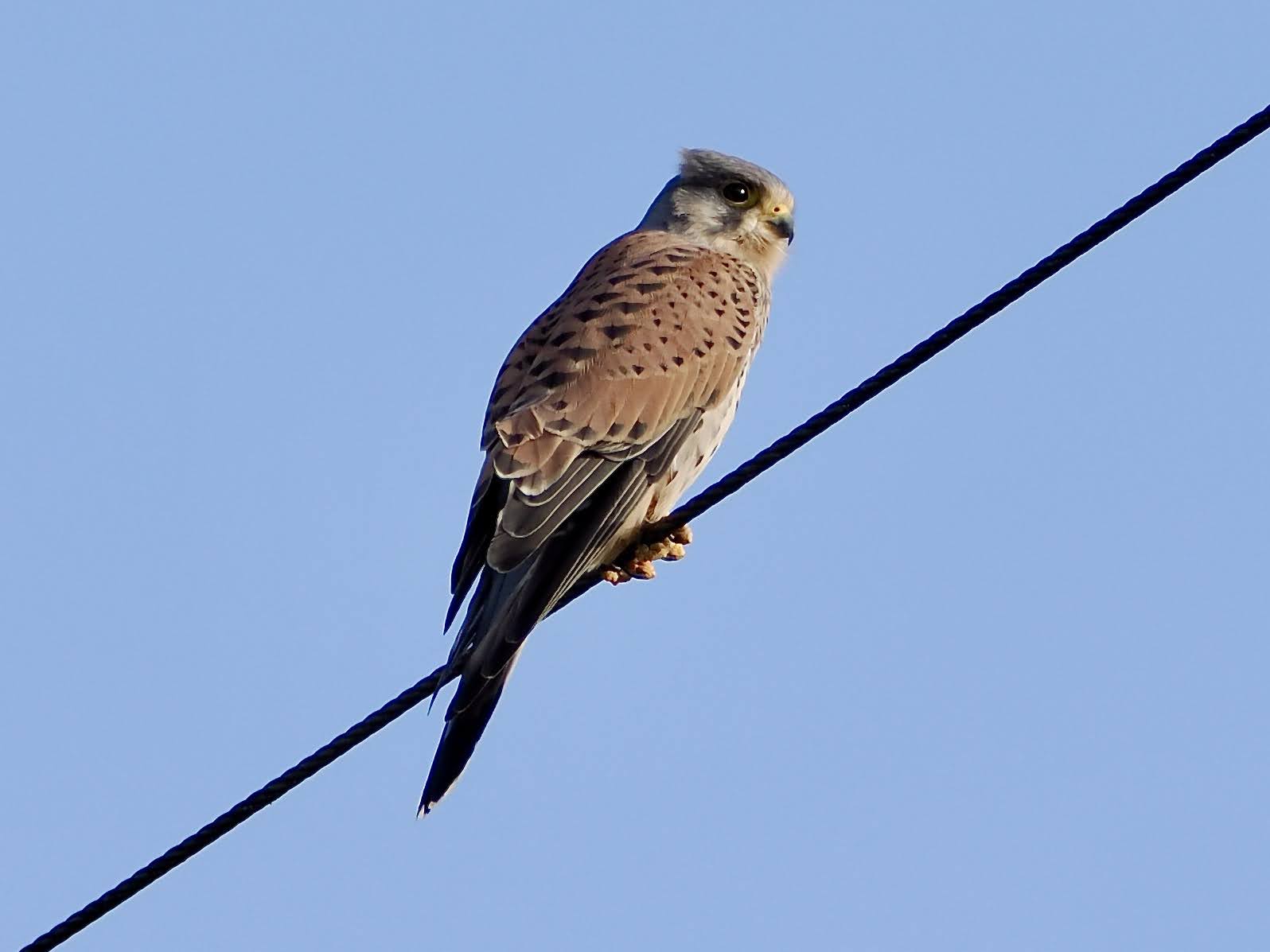
February has seen the arrival of noisy groups of Siskins chattering in the treetops These are striking little yellow birds with a black crown and dark stripes. There have also been some female and male kestrels around the Torrs Riverside Park, often perching on lampposts, trees and cables. If you stop and listen, you’ll hear the usual abundance of smaller birds, great tits calling to each other: Blue Tits Robins, Wrens and Thrushes singing the songs of Spring.
The only aquatic songbird, the dipper, has been busy singing too, and perhaps looking for a mate up and down the rivers Sett and Goyt.
The high river levels have made the river particularly difficult for our local Kingfishers who prefer slower water to fish in. Whilst I have spotted a couple of Kingfishers, they’re frequency is much lower than normal. The high rivers have also brought in a bit of debris, which our local Grey Wagtails were unfortunately poking around in. Thankfully most people do remember to take litter home.
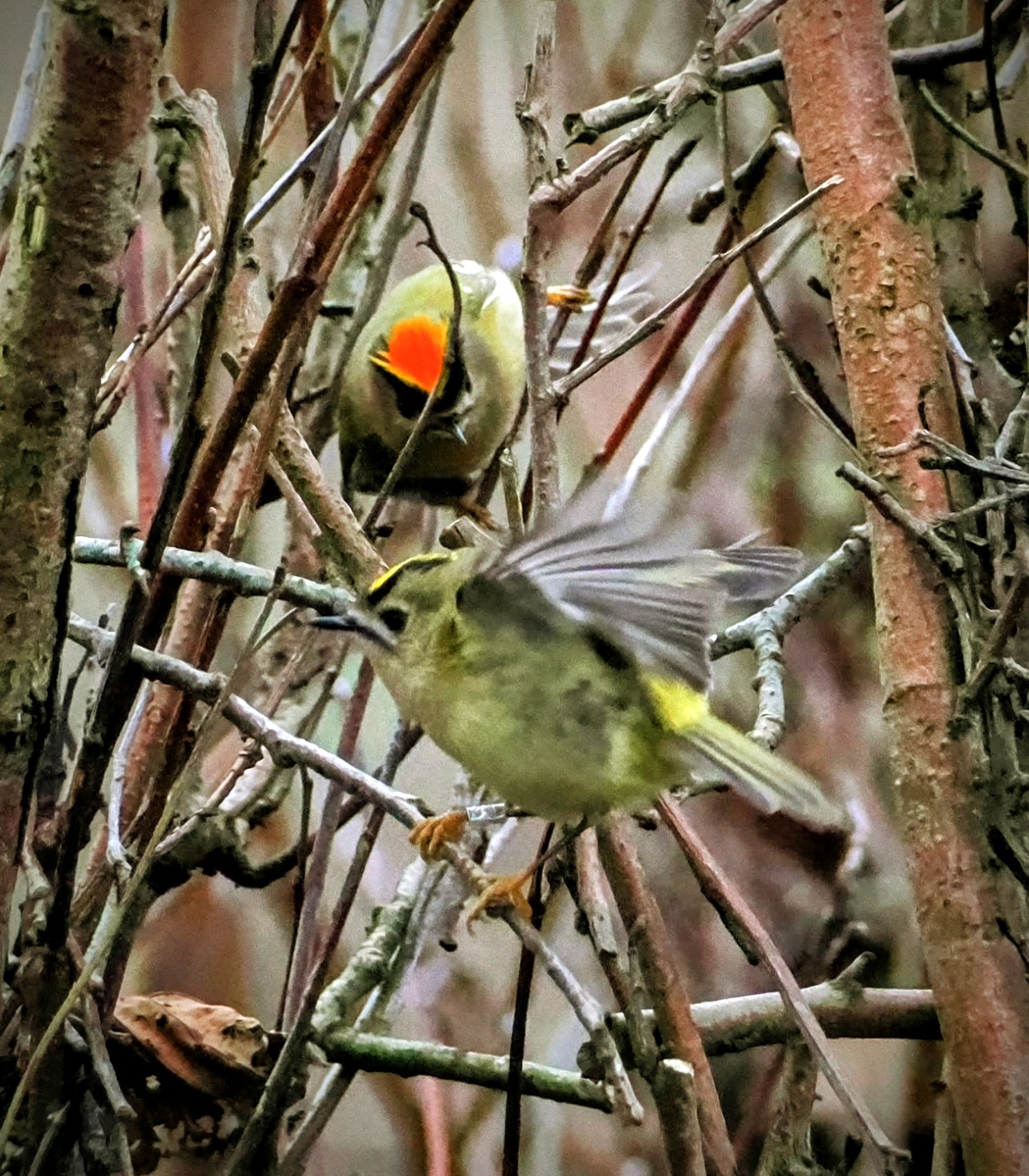
Perhaps the most striking photo I’ve got in February is of a pair of courting Goldcrests which is the UK’s smallest bird. They usually have a fairly thin gold stripe on top of their head but when they’re courting the male displays a very vibrant wide orange crest. The male that I saw followed the every move of the female as she flitted around from twig to twig.
So get out and have a look around whilst the foliage is still in its infancy and the wildlife is still fairly easy to spot because as the warmth of Spring will be welcome it will be harder to spot wildlife hiding in the emerging foliage.
John Kitching
Photos from New Mills Wildlife Photography